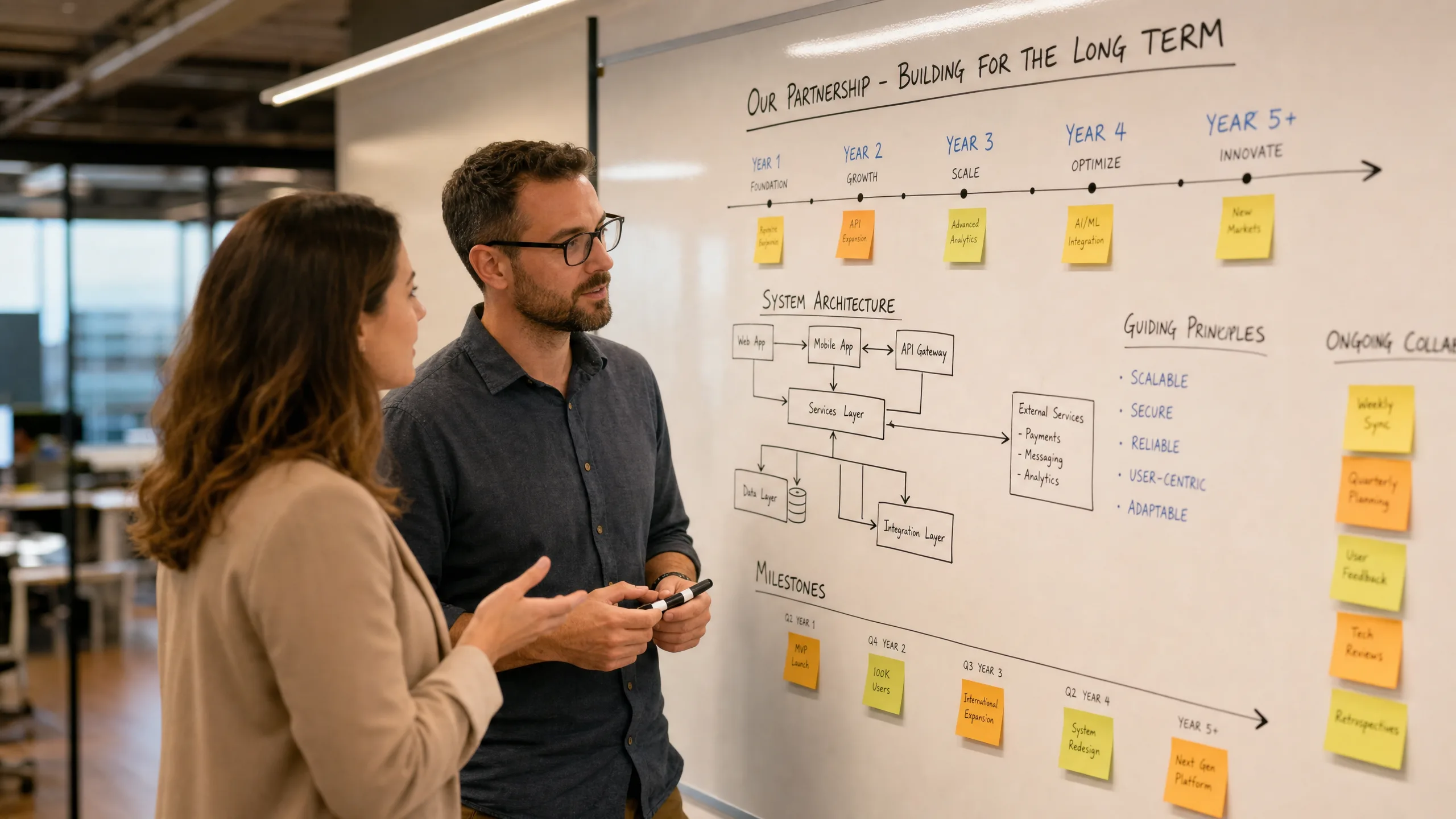
A System That Grew With the Business
Over 13 years ago, we began building a custom ERP system for an operational business that had outgrown its existing tools. What started as a core workflow management system has evolved into a comprehensive operational platform — hundreds of workflows, mobile access for field teams, advanced reporting, scheduling systems, and integrations with accounting, email, and external partners.
This isn't a case study about a project with a start and end date. It's about a long-term operational partnership where the system continuously evolves to meet new challenges, new workflows, and new business requirements. The system today bears little resemblance to what was built in year one — but every evolution was incremental, controlled, and driven by real operational need.
The Scale
What Was Built
Core Workflow Management
The foundation — job orders, site management, client relationships, and the operational workflows that drive the business day-to-day. Every process from order intake to job completion to invoicing.
Scheduling & Resource Planning
Visual scheduling for field crews across multiple teams and locations. Availability management, conflict detection, and automatic notifications. Scheduling that accounts for travel time, job complexity, and crew skills.
Mobile & Web Integration
Field crews access job details, update status, capture photos, and submit notes from mobile devices. Real-time synchronisation with the central system. Works in areas with poor connectivity.
Reporting & Analytics
Operational dashboards, financial reporting, performance metrics, and trend analysis. Custom reports built for specific management needs. Data-driven decision making across the business.
Integration Layer
Connections to accounting (Xero/MYOB), email systems, mapping services, external partner systems, and document management. Data flows automatically between systems without manual intervention.
Multi-Team Operations
Different teams with different workflows, different permissions, and different operational needs — all within one unified system. Office staff, field crews, management, and external partners each see what they need.
How the System Evolved
The system didn't arrive fully-formed. It grew organically with the business:
Year 1-2: Core workflow management — job orders, sites, clients, basic scheduling
Year 3-4: Mobile access for field crews, photo capture, real-time status updates
Year 5-6: Advanced scheduling, resource planning, accounting integration
Year 7-8: Reporting dashboards, performance analytics, trend analysis
Year 9-10: External partner integrations, automated email workflows
Year 11-12: AI classification, automated document processing
Year 13+: AI email agents, autonomous workflow processing
Each evolution was driven by real operational need — not technology trends or vendor roadmaps.
Operational Visibility
After 13 years of development, the system provides complete operational visibility. Management can see every active job, every crew's status, every pending task, and every bottleneck — in real-time. Financial performance, operational efficiency, and resource utilisation are all visible at a glance. Decisions are made on current data, not last week's spreadsheet.
The Value of Long-Term Development
A custom ERP system isn't a one-time purchase — it's an operational asset that compounds in value over time. Every workflow automated, every integration connected, every report built adds permanent operational capability. After 13 years, this system handles operations that would require dozens of separate tools and significant manual coordination without it.
The business couldn't operate at its current scale without this system. It's not just software — it's operational infrastructure that enables growth, efficiency, and competitive advantage that generic tools simply cannot provide.