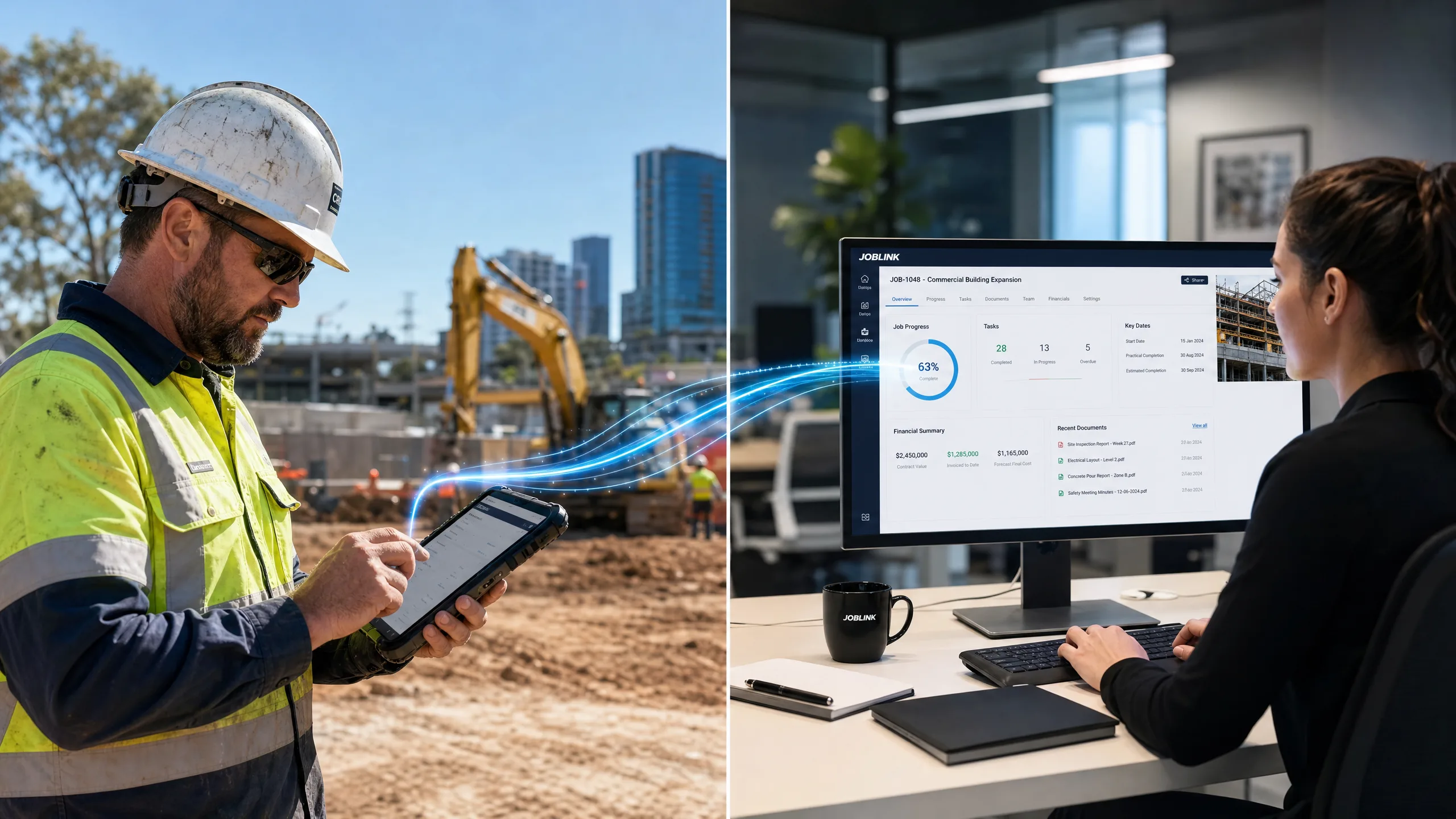
The Field-Office Disconnect
In operational businesses, the field and the office operate in different worlds. Field crews are focused on completing jobs. Office staff are focused on scheduling, customer communication, and administration. Without proper systems connecting them, information flows through phone calls, text messages, and end-of-day updates — creating delays, miscommunication, and operational blind spots.
Delayed Information
Office doesn't know a job is complete until the crew returns or calls in. Customers wait hours for updates that should take seconds.
Scheduling Conflicts
Without real-time visibility, double-bookings and scheduling conflicts are discovered too late — when the crew arrives at the wrong site.
Communication Overhead
Office staff spend hours daily calling crews for status updates, relaying customer messages, and coordinating changes.
No Operational Visibility
Management can't see what's happening across the business in real-time. Decisions are made on yesterday's information.
Real-Time Coordination Systems
Mobile Workflows for Field Teams
Field crews see their schedule, job details, customer information, and special instructions on their mobile device. They update job status with a tap — 'arrived', 'in progress', 'complete'. Photos, notes, and time tracking captured on-site without paperwork.
Real-Time Status Visibility
Office staff see live job status across all crews on a single dashboard. No phone calls needed. When a crew marks a job complete, the office knows immediately. When a delay occurs, it's visible instantly — not discovered hours later.
Intelligent Scheduling
Visual scheduling boards show crew availability, job locations, and time estimates. Drag-and-drop rescheduling with automatic notifications to affected crews and customers. Conflict detection prevents double-bookings before they happen.
Operational Dashboards
Management sees the full operational picture in real-time. Jobs in progress, jobs completed today, crews on-site, upcoming schedule, bottlenecks, and delays — all on one screen. Make decisions based on what's happening now, not what happened yesterday.
The Impact of Connected Operations
When field and office are connected in real-time, everything improves. Customers get faster updates. Scheduling becomes proactive instead of reactive. Office staff spend time on high-value work instead of chasing status updates. And management has the visibility to identify and resolve bottlenecks before they become problems.
Eliminating Delays From Disconnected Systems
Every delay in information flow costs money. A customer who waits 4 hours for a status update that could have been instant. A crew that drives to a cancelled job because the message didn't reach them. An invoice that's delayed by a week because completion paperwork is sitting in someone's van. These delays compound across hundreds of jobs per month into significant operational cost.
Our coordination systems eliminate these delays by connecting every participant in the workflow — field crews, office staff, customers, and management — through a single, real-time system designed for how operational businesses actually work.